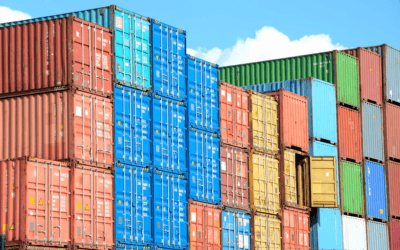


Remember the iconic image of the world’s largest container ship stuck crossways in the Suez Canal? Who could have predicted that one?
But more importantly, who could have predicted the Covid-19 pandemic that created an environment in which a single ship getting stuck in a canal meant a domino fallout in the world-wide supply chain? We have always lived in an unpredictable economic environment, but rarely more so than during the past eighteen Covid-dominated months.
March of 2020 saw schools shut down, restaurants, gyms, hair salons, and hotels laying off employees. Grocery store shelves were empty of paper and cleaning products and even some foods.
During those first weeks and months of the Covid-19 pandemic, both the supply and demand sides of commerce were adversely affected. Many companies found themselves stuck and floundering like that ship in the canal.
On the supply side – factories shut down or found themselves over capacity. At the same time, they faced shortages of things like spun blown polyester, nitriles, and hand sanitizers. On the demand side, cruise lines shut down, hospitality businesses closed, elective surgeries were cancelled. Shortages of goods like ketchup, toilet paper, and cleaning supplies frustrated shoppers. Like most other companies, Calderon Textiles faced being “stuck in the canal” in terms of keeping our business afloat. But flexibility and innovation served as life savers as we navigated through the unpredictable pandemic-driven environment of 2020 and 2021.
Calderon Pivots to Enter the PPE Product Line: Flexibility and Innovation Required
The first major challenge, back in March of 2020, was to shift our staff to working at home, which meant embracing tools like virtual meeting apps. It wasn’t until April of the following year, that we were able to transition back to our base facility.
The second major challenge was that multiple of our business units lost demand for products as numerous clients temporarily shuttered or downsized their own businesses. The domino effect of this lost demand was a suddenly static inventory. Of course, Calderon is not unique in this experience. But having gone through it, we have a deeper understanding of what our clients have also faced.
So, while flexibility was needed in terms of dealing with our workforce and our inventory, innovation was on call to meet a tsunami demand engineered by the pandemic: the need for PPE—Personal Protective Equipment. An acronym that everyone over the past eighteen months has become intimately familiar with.
How to Quickly Pivot to Meet Demand, Supply, and Execution
There are five essential steps to successfully pivot when challenged with an unexpected demand, supply, and execution opportunity:
- Identify what is needed.
- Conduct market research.
- Focus on core competencies.
- Develop a plan.
- Communicate changes.
Let’s take a closer look at each of these steps with examples from Calderon’s pandemic experience.
Identify Demand
The first step in pivoting from an inventory geared toward industries that were temporarily stalled to meeting a critical demand for PPE was for Calderon’s team to identify exactly what was needed. And in our pandemic-driven world, what was needed was pretty clear—masks.
Healthcare and hospitality (our usual clients) suddenly found themselves short of masks. Businesses, institutions, government entities—anywhere that people worked and gathered—were desperate for quality protective face coverings. So masks became our first priority.
We soon found we could provide other needed PPE as well, such as face shields and isolation gowns. Meanwhile, home essentials, cleaning equipment, and home office supplies were also in demand as businesses, schools, and government offices transitioned to work from home.

Conduct Market Research
As we looked at potential products to meet the PPE demand, the Calderon team focused our market research on levels of performance of individual items and features and benefits of the product we planned to offer.
We also needed to take into account the factory competencies of our suppliers. What were their manufacturing capabilities? Were their products FDA approved? Did they have product lines that met the needs we had identified?
And finally, we did a cost-benefit analysis. All this – in an extremely short amount of time – if we were going to pivot from warehousing a static inventory to filling a hole in the demand chain.